




Choose Your Country or Region
Select a different country or region to view content tailored to your location.


Stefan is a financial writer and Forex trading enthusiast with over a decade of experience in finance and technology. His interest in geopolitics, big data, and market sentiment drives his analysis of global market trends, with unbiased, well-researched content to help traders navigate the markets confidently.

The Importance of Risk Management in Forex Trading

Trading with exchange-traded products, such as CFDs and other products, always involves risk. Therefore, it is crucial to have a well-planned trading strategy that includes risk management. We have compiled a guide with tips, tools, and techniques that you can use to feel secure in the market.
What are the Risks?
Lack of Knowledge: Before starting Forex trading, proper knowledge is essential. Use a demo account before transitioning to live trading; it's an excellent way to practice trading in a risk-free environment while getting familiar with the platform and testing various tools and strategies. Educate yourself by participating in webinars and seminars, doing online courses, listening to podcasts, and keeping up with financial news.
Emotional Aspects: It can be difficult to keep emotions in check when the market fluctuates. When using a demo account, try to replicate situations as realistically as possible.
Leverage: With leverage, you can borrow money to open and manage more prominent trading positions than the size of your trading capital allows. This means that profits can be higher, but losses can also be more significant. In countries like the Philippines, where clients are onboarded through less strict regulators, leverage can be up to 3000:1, which is very risky.
Volatility: Markets can sometimes change quickly and unexpectedly due to various factors, such as announcements, decisions, or news. Keep track of important events with an economic calendar.
Calculate Your Risk Ratio
Calculating your risk ratio can be helpful to ensure you are not risking too much of your capital. A risk ratio is the relationship between the money you are willing to risk and the potential profit.
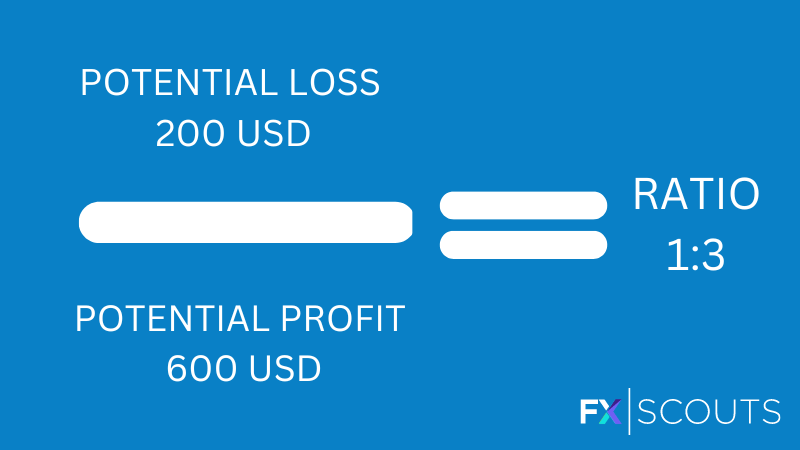
You calculate the ratio by dividing the potential profit of a position by the potential loss. Many tend to stick to a maximum ratio of 1:3, meaning that the potential loss on a position is, for example, 200 USD and the maximum potential profit is 600 USD, but this varies depending on how much you are able and willing to risk.
Tools and Techniques for Risk Management
Stop-Loss Orders: A stop-loss order is an instruction that automatically sells an asset when the price reaches a certain level. The purpose is to limit potential losses by closing a position before the loss becomes too substantial.
Negative Balance Protection: Negative Balance Protection is a safeguard that some Forex brokers offer to prevent you from losing more than your invested capital. If the account goes below zero, the broker covers the loss so that you never lose more than what you deposited. Always ensure that your broker offers negative balance protection.
Risk Management Tools: Some brokers have developed their own risk management tools, but you can also use external tools to find and follow a risk management strategy more easily.
Limit Your Capital: Last but not least—CFDs are complex instruments that carry a high risk. Never trade with more capital than you can afford to lose.
Summary
Effective risk management is crucial in Forex trading to protect your capital and minimise potential losses. To manage risks, you should educate yourself, use demo accounts, and stay updated on market developments. Emotional reactions and leverage can increase risk, so it is crucial to have a clear strategy and use tools such as stop-loss orders and negative balance protection.
Others Also Viewed
Explore more resources that fellow traders find helpful! Check out these other guides to enhance your forex trading knowledge and skills. Whether you’re searching for the best brokers, educational material, or something more specific, we’ve got you covered.

Best Brokers in the Philippines
Discover the top Forex brokers in the Philippines. Compare top platforms, fees and features to make an informed trading choice.

How does Forex Trading Work?
What is Forex trading and how does it work? An easy-to-read guide including how to trade, and how to choose a reliable broker.

Forex Brokers for Beginners
Explore the best Forex brokers for beginners in the Philippines with user-friendly platforms, educational resources, and demo accounts.
Meet the Experts Behind Our Unbiased Reviews
Chris Cammack
Partner Manager and Financial Writer

Alison Heyerdahl
Head of Content
Stefan de Clerk
Financial Writer
Our broker ratings are derived from rigorous testing by industry experts and experienced traders. We thoroughly evaluate regulatory compliance, security, transparency, trading performance, and customer service. We never accept payment for higher scores, ensuring our ratings remain unbiased, factual, and trustworthy—so you can confidently choose a reliable broker for your financial safety and trading success.
For detailed information about our testing methodology click here.